- May 20, 2026
- Last Update 09:12 PM
Global Markets in Turmoil: The Economic Aftershocks of the Iran Conflict
The global financial landscape is currently reeling as the ongoing conflict involving the United States, Israel, and Iran escalates into its second week. The situation has sent shockwaves through energy markets, causing crude oil prices to spike dramatically, while stock markets across the Asia-Pacific region have experienced severe, sharp declines.
As military operations intensify, the world's attention has turned to a critical maritime artery—the Strait of Hormuz—and the dire economic consequences that a prolonged closure may inflict on businesses and consumers worldwide.
The Strait of Hormuz: A Global Chokepoint
The Strait of Hormuz is arguably the most strategically vital waterway for the world’s energy security. Acting as a narrow neck connecting the Persian Gulf to the Gulf of Oman and the wider Indian Ocean, it serves as the primary transit point for approximately 20% of the world’s daily oil supply.
For many nations, particularly those in Asia, this is the essential lifeline for energy imports. With reports indicating that traffic through this critical corridor has all but halted since the conflict began, the fear of supply chain paralysis has gripped global markets. As tankers hesitate to enter the zone, and as military targets have included vital energy infrastructure within the region, the market’s previous "wait and see" approach has been replaced by rapid, defensive panic.
Market Panic: Stocks Slump and Trading Halts
The reaction in equity markets has been immediate and severe. Investors, wary of the potential for prolonged supply shocks and geopolitical instability, have engaged in widespread sell-offs.
-
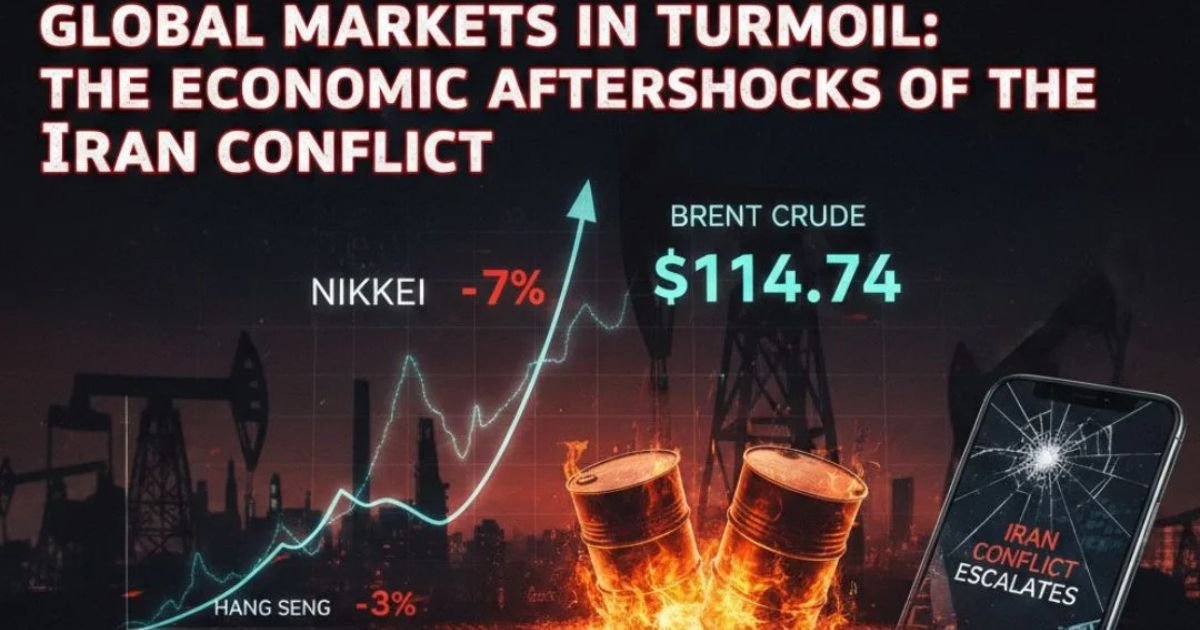
Nikkei 225 (Japan): Dropped by more than 7%.
-
Hang Seng (Hong Kong): Lost over 3%.
-
ASX 200 (Australia): Fell more than 4%.
-
Kospi (South Korea): Slumped by over 8%.
In South Korea, the extreme volatility was so intense that the market triggered a circuit breaker—a built-in regulatory mechanism designed to curb panic selling and allow investors to regain composure.
Understanding Market Volatility
Circuit breakers are "speed bumps" for the market. When a benchmark index declines by a predetermined percentage (often 10%, 15%, or 20%), trading is automatically suspended for a specific period. This pause is crucial: it prevents emotional, reactionary selling from creating a total market collapse, offering investors time to assess the fundamental reality of the news rather than reacting to the noise of the panic.
Energy Prices: The Cost of Conflict
The surge in oil price levels has been nothing short of breathtaking. Within a single morning of trading in Asia, Brent crude prices jumped nearly 24% to reach $114.74, while the brent crude oil price continued to fluctuate as markets digested the news. Similarly, Nymex light sweet crude surged over 26% to $114.78.
Analysts warn that if the disruption to the Strait of Hormuz persists until the end of March, we could realistically see the brent crude benchmark climbing toward, or even exceeding, $150 a barrel. The oil price today is reflective of a high "war premium" being priced into futures contracts.
Global Impact of Rising Oil Prices
The repercussions of these price hikes are not limited to the gas pump:
-
Inflationary Pressure: Higher costs permeate every aspect of the economy, increasing transportation, logistics, and production costs for virtually all goods.
-
Derivative Risks: Vital products like jet fuel and agricultural fertilizers rely on petroleum and natural gas as key feedstocks. Disruption here threatens to create a secondary, long-lasting shock in food prices and global agricultural output.
-
Supply Shifts: Some Asian consumers are already bidding up prices for US gas, forcing tankers to re-route mid-transit, which further complicates and increases the cost of global energy logistics.
The Political Outlook
Amidst these developments, the political situation in Iran remains static, with Mojtaba Khamenei named as the successor to his father, Ali Khamenei. This has been interpreted by markets as a signal that the hardline leadership in Tehran is entrenched, suggesting that a rapid diplomatic resolution or de-escalation may be unlikely.
While US President Donald Trump has characterized the short-term price increases as a "small price to pay" for mitigating the nuclear threat posed by Iran, the energy department has clarified that it is Israel leading the targeting of energy infrastructure.
For the average consumer and global investor, the core question remains: How long will this last? As experts have noted, the market is beginning to internalize the reality that this conflict will not end quickly. The duration of this disruption will be the ultimate determinant of whether this remains a severe, temporary shock or evolves into a long-term restructuring of global energy and economic policy.
Popular Posts
Financial Services

- April 09, 2026
Top 10 CPaaS Companies in India Driving Growth in 2026
Entertainment

Lifestyle

Game

Game

Politics
Politics
Business

- February 24, 2026
IBM Stock Plummets as Anthropic Targets Legacy COBOL Code
Lifestyle

- February 20, 2026
8 Best Places in the USA for First-Time Visitors: A Local's Perspective
Business