- October 31, 2026
- Last Update 08:30 AM
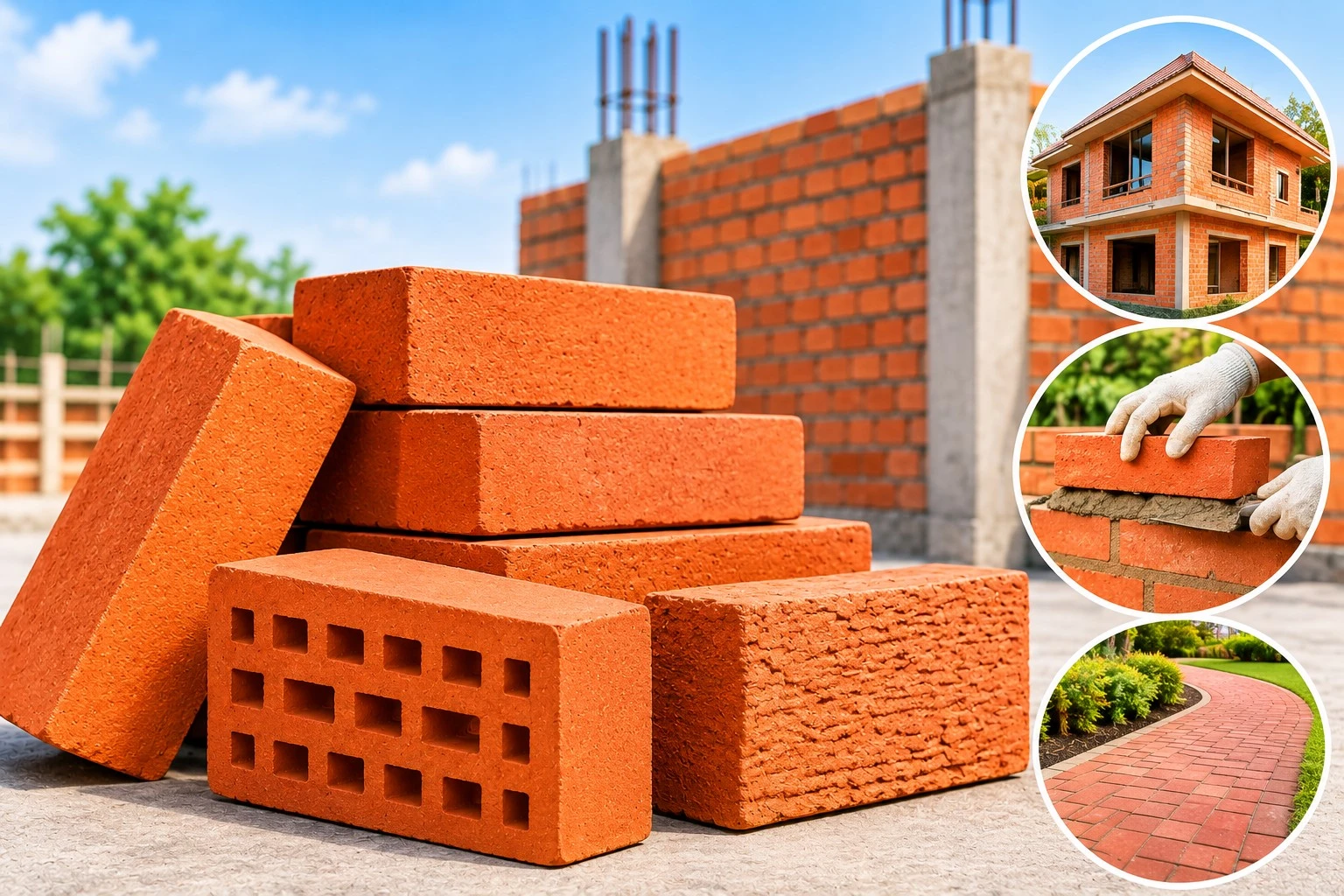
Clay Brick Manufacturers: Types, Uses, and How to Choose the Right Bricks
Bricks are one of the most widely used building materials in residential, commercial, and industrial construction. They provide strength, durability, and flexibility for different building projects. Choosing reliable Clay Brick Manufacturers is important for finding bricks that meet your construction requirements.
Today, builders can choose from traditional clay bricks, fly ash bricks, and AAC blocks. Each material has different properties, costs, and applications. Understanding these differences helps contractors, builders, and property owners make informed decisions.
In this guide, we explain the types of bricks, their benefits, and the factors to consider when selecting building materials for your project.
Quick Answer: How Do You Choose Clay Brick Manufacturers?
Choose clay brick manufacturers based on product quality, dimensional consistency, strength, durability, supply capacity, and delivery arrangements. Before purchasing, check whether the bricks are suitable for your intended construction work and meet applicable building standards.
You should also compare clay bricks with alternatives such as fly ash bricks and AAC blocks to determine which material best fits your project requirements and budget.
What Are Clay Bricks?
Clay bricks are building units made primarily from clay and other suitable natural materials. They are shaped, dried, and fired at high temperatures to develop their strength and durability.
These bricks are commonly used in residential buildings, boundary walls, commercial properties, and other construction projects.
Main Features of Clay Bricks
-
Durability: Properly manufactured bricks can provide long-lasting performance.
-
Versatility: Suitable for various masonry applications.
-
Fire resistance: Fired clay bricks are generally non-combustible.
-
Thermal properties: Brick walls can help moderate temperature changes, depending on wall design and construction.
-
Availability: Clay bricks are widely used in traditional construction.
The actual quality of bricks depends on the raw materials, manufacturing process, firing conditions, and quality control.
Why Is Choosing the Right Clay Brick Manufacturer Important?
The quality of bricks can affect masonry work, material wastage, construction time, and the long-term performance of a building.
When evaluating clay brick manufacturers, consider the following factors.
1. Product Quality
Look for bricks with consistent dimensions, sound structure, and suitable strength for the intended application. Ask the manufacturer or supplier for relevant test reports when required.
2. Manufacturing Standards
Check whether the products comply with applicable Indian Standards and project specifications. Quality requirements may vary depending on the type and intended use of the bricks.
3. Supply Capacity
Large construction projects need a consistent supply of building materials. Confirm that the manufacturer can meet your expected quantity and delivery schedule.
4. Transportation and Delivery
Bricks can break during loading, transportation, and unloading. Discuss packaging, handling, delivery arrangements, and responsibility for damaged materials before placing an order.
5. Pricing and Value
Compare quotations based on brick dimensions, quality, quantity, transportation, and applicable taxes. The lowest price may not provide the best overall value if the material creates additional wastage or rework.
Clay Bricks vs Fly Ash Bricks
Clay bricks and fly ash bricks are both used in construction, but their raw materials and manufacturing processes differ.
What Are Fly Ash Bricks?
Fly ash bricks are manufactured using fly ash and other suitable materials, such as sand or stone dust, along with binding agents. Their composition and curing process depend on the manufacturing method.
Businesses looking for Fly Ash Bricks Manufacturers should evaluate product strength, dimensions, water absorption, curing quality, and compliance with applicable standards.
Key Differences
| Feature | Clay Bricks | Fly Ash Bricks |
|---|---|---|
| Main materials | Primarily clay | Fly ash and other suitable materials |
| Manufacturing process | Shaping, drying, and firing | Moulding and curing, depending on the process |
| Appearance | Often reddish or earthy | Commonly grey, depending on the mix |
| Dimensional consistency | Depends on manufacturing quality | Can be consistent with controlled production |
| Environmental considerations | Firing may require significant energy | May utilise fly ash, an industrial by-product |
| Best choice | Depends on the application and specifications | Depends on the application and specifications |
Neither material is automatically the best choice for every project. Compare technical performance, local availability, cost, and construction requirements before deciding.
Understanding AAC Blocks and AAC Blocks Price
Autoclaved Aerated Concrete (AAC) blocks are lightweight masonry units made from cementitious materials, lime, silica-rich materials, water, and a gas-forming agent. They are cured under high-pressure steam in an autoclave.
AAC blocks are commonly used for internal and external walls in suitable building designs.
Factors That Affect AAC Blocks Price
The AAC Blocks Price can vary according to several factors:
-
Block dimensions: Different sizes and thicknesses have different prices.
-
Density and grade: Specifications can affect the material cost and performance.
-
Order quantity: Bulk orders may have different commercial terms.
-
Transportation: Delivery distance and freight costs affect the final price.
-
Location: Local availability and market conditions influence pricing.
-
Supplier terms: Taxes, unloading, and delivery arrangements may be quoted separately.
When comparing prices, check whether the quotation is per block, per cubic metre, or based on another unit. Also compare the specifications and delivered cost rather than relying on the headline price alone.
Clay Bricks vs AAC Blocks: Which Is Better?
Clay bricks and AAC blocks have different characteristics. The right choice depends on the building design, structural requirements, budget, and construction method.
| Factor | Clay Bricks | AAC Blocks |
|---|---|---|
| Weight | Generally heavier | Generally lighter |
| Thermal insulation | Depends on wall thickness and design | Often offers better thermal insulation at comparable wall thickness |
| Construction speed | Depends on brick size and workmanship | Larger units may speed up masonry work |
| Mortar requirements | Depends on the masonry system | Often uses less mortar per unit area, depending on the system |
| Handling | Smaller units are usually handled individually | Larger blocks require suitable handling |
| Suitability | Traditional masonry applications | Lightweight masonry applications where specified |
Before choosing a material, consult your architect or structural engineer. Wall design, load requirements, local conditions, and applicable building standards must be considered.
How to Select the Right Bricks for Your Construction Project
Choosing suitable building materials early can help control costs and reduce construction delays.
1. Identify the Application
Determine whether you need bricks for load-bearing masonry, partition walls, boundary walls, or another application. Material specifications may differ for each use.
2. Check Strength and Water Absorption
Ask for relevant test results and confirm that the product meets the requirements of your project. Do not rely on appearance alone to assess quality.
3. Inspect Dimensions and Shape
Uniform dimensions help masons maintain consistent joints and reduce unnecessary adjustments. Inspect a sample batch before placing a large order.
4. Compare Total Project Cost
Consider the material price, transportation, handling, mortar, labour, wastage, and any additional finishing requirements.
5. Confirm Supply and Delivery
Plan deliveries according to the construction schedule. Proper storage and handling can help minimise damage and material loss.
Why Consider Chhikara Builders?
Chhikara Builders serves the construction materials market with a focus on building products for construction projects. When evaluating materials for your next project, compare product specifications, quality, availability, and delivery requirements before making a decision.
Whether you are considering clay bricks, fly ash bricks, or AAC blocks, choose materials based on the technical requirements of your building rather than price alone.
Contact the supplier to confirm available products, specifications, quantities, and delivery arrangements for your location.
Frequently Asked Questions
1. How do I choose reliable clay brick manufacturers?
Compare product quality, dimensions, strength, applicable standards, supply capacity, delivery arrangements, and pricing. Request relevant test reports when required for your project.
2. Are fly ash bricks better than clay bricks?
Both materials can be suitable for construction. The better option depends on the required strength, water absorption, application, availability, cost, and project specifications.
3. What affects AAC blocks price?
AAC blocks price depends on dimensions, density, grade, order quantity, location, transportation, and supplier terms. Compare quotations using the same unit and specifications.
4. Are AAC blocks lighter than clay bricks?
AAC blocks are generally lighter than conventional clay bricks of comparable construction use. However, the overall wall weight depends on the block dimensions, density, thickness, and wall design.
5. What should I check before buying bricks in bulk?
Check dimensions, strength, water absorption, quality consistency, applicable standards, delivered price, supply capacity, and the supplier's delivery schedule.
Conclusion
Selecting reliable Clay Brick Manufacturers is an important step in planning a durable and cost-effective construction project. Compare clay bricks, fly ash bricks, and AAC blocks based on their properties, technical specifications, availability, and total installed cost.
Before purchasing, confirm that the selected material meets your building requirements and applicable standards. Careful material selection can help reduce wastage, improve construction planning, and support long-term building performance.
Chhikara Builders encourages informed material selection based on project needs, product quality, and value.
Popular Posts
Business

- October 31, 2026
Top 5 Refrigerator Brands in India 2026: A Complete Buying Guide
Technology

- October 31, 2026
Commercial Solar Power Plant: A Simple Guide for Businesses in 2026
Business

- October 31, 2026
Air Dryer Machine: Types, Working, Benefits, and Applications
Technology

Health

Real Estate

Real Estate

Real Estate

Business

Technology